
Own a hood cleaning franchise built on work the fire code requires.
As a Kitchen Guard franchise owner, you run NFPA-96 hood and exhaust cleaning programs for restaurants, hotels, hospitals and schools: commercial accounts on recurring schedules.
- Code-driven demand
- Recurring schedules
- Commercial kitchens only
Why hood cleaning is a recession-resistant business
Commercial kitchen exhaust systems have to be cleaned on a schedule. NFPA 96, the fire code standard for commercial cooking, sets how often based on how a kitchen cooks: monthly for solid-fuel cooking, quarterly for high-volume kitchens, twice a year for moderate volume and once a year for low volume.
Fire marshals check for it during inspections, and insurance carriers expect a cleaning record. A restaurant can cut its menu or delay a remodel in a slow year, but skipping hood cleaning risks a failed inspection or a denied claim.
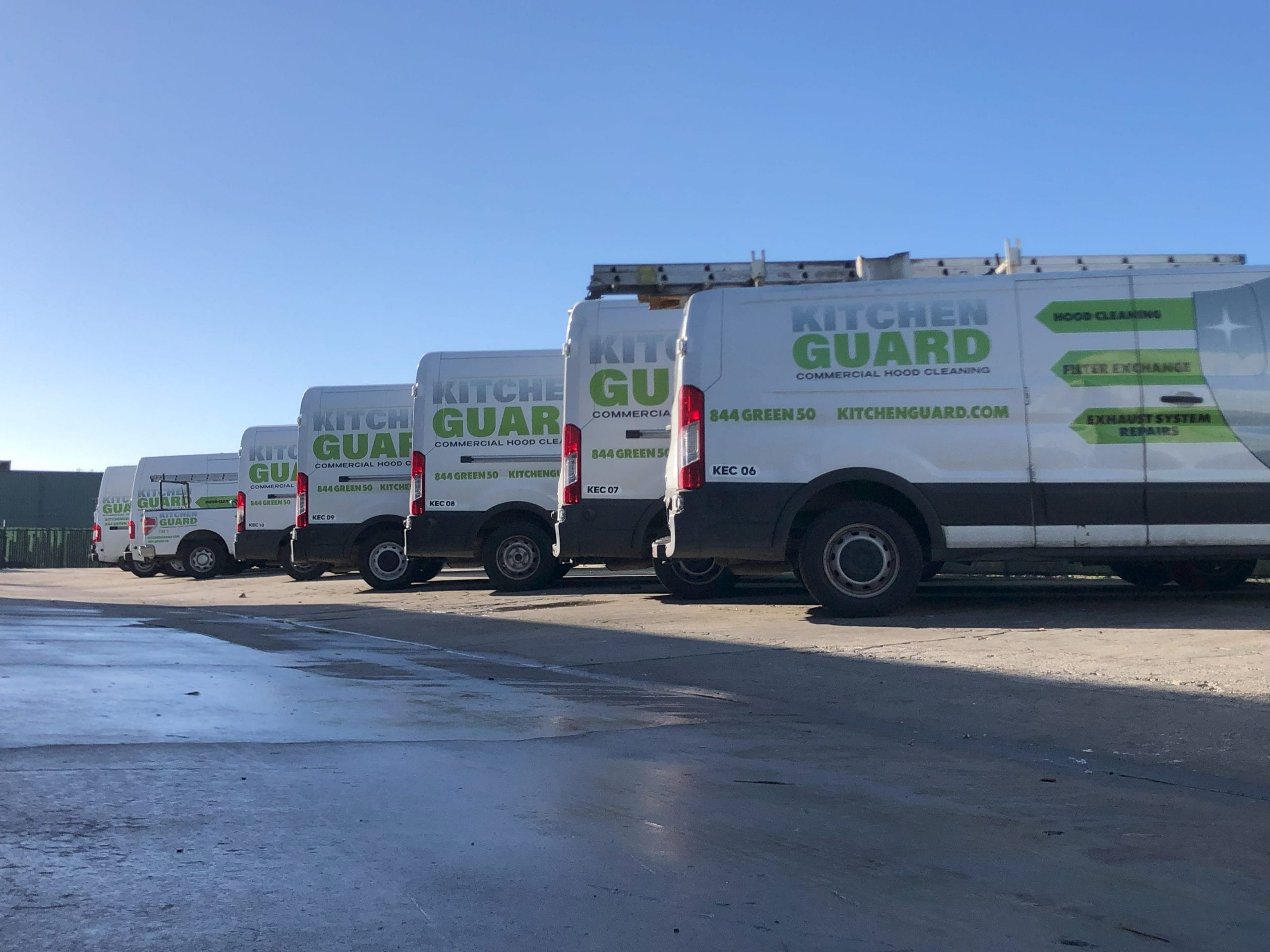
That’s why Kitchen Guard demand doesn’t swing with the economy the way discretionary services do. The same accounts need service on the same cycle, year after year. Owners build routes of scheduled accounts across foodservice, hospitality and healthcare, and every visit ends with before-and-after photos and a written report that inspectors and carriers accept. See how Kitchen Guard serves its customers at kitchenguard.com.
- 35+Operating franchises
- 15+Years in business
- NFPA-96Compliance standard
- 8Days of hands-on owner training
Figures as of December 31, 2025. Financial performance information is provided only in Item 19 of the Kitchen Guard Franchise Disclosure Document.
What you'd own
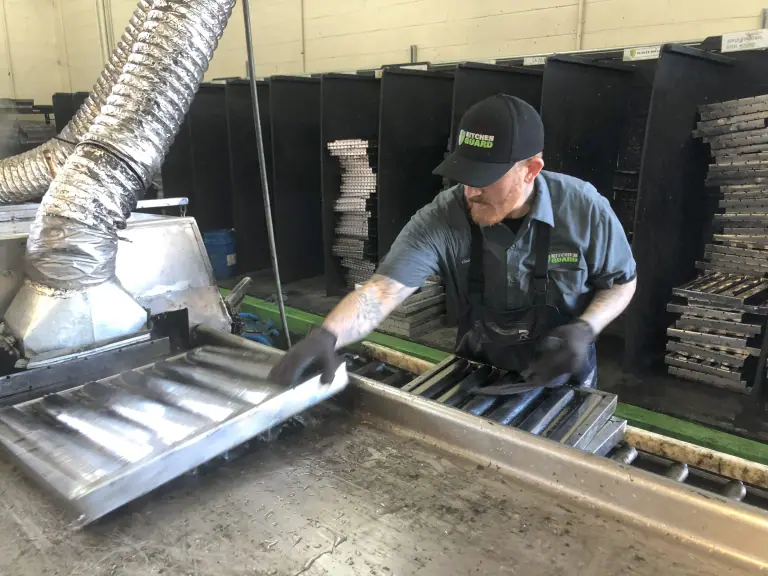
Recurring hood cleaning accounts
NFPA 96 sets how often each kitchen needs service, so every account comes back on a monthly, quarterly, semi-annual or annual cycle.
Add-on revenue on every visit
Exhaust fan service, repairs and rooftop grease containment add to the ticket on trips you're already making.
Consumable and filter revenue
Filter exchange and filter chemical sales bring repeat orders between deep cleanings.
Documentation that keeps accounts renewing
Before-and-after photos and a written report after every visit give operators what fire marshals and insurers ask for, and a reason to stay on schedule with you.
Revenue is schedule-driven: monthly, quarterly, semi-annual and annual cleaning cycles set by code, billed per visit across a route of accounts. Owners can also offer pressure washing and vapor cleaning to the same commercial customers.
Investment snapshot
What it costs to open a Kitchen Guard hood cleaning franchise.
-
Minimum Liquid Capital $75,000 cash or liquid assets
-
Minimum Net Worth $250,000 includes liquid capital
-
Initial Franchise Fee $49,000 one-time, due at signing
-
Veteran and First Responder $10,000 off the initial franchise fee for eligible veterans and first responders
The initial franchise fee and available discounts are set out in Item 5, and the estimated initial investment in Item 7, of the 2026 Kitchen Guard Franchise Disclosure Document. Minimum liquid capital and net worth are Kitchen Guard’s qualification guidelines.
What owners get
Marketing and lead generation
National campaigns, a local website and CRM support, plus a grand opening campaign that starts two months before you open.
Training and coaching
Kitchen Guard Academy (10 classroom hours and 8 days hands-on in Escondido, California), then a dedicated Franchise Advisor who sets monthly goals with you.
Operational technology
Franchise management software that tracks inspections, close rate, average ticket and revenue per truck.
Purchasing power
Vendor pricing on the equipment, chemicals and filters you'll buy to start and grow.
National brand credibility
Restaurant operators and facilities directors want a documented, code-compliant provider. Kitchen Guard's name, uniformed crews and wrapped trucks open those doors.
-

The platform behind the brand
Seven commercial service brands. 325+ franchise owners. $600M+ in combined annual platform revenue. Cross-brand lead sharing and shared systems. Backed by The Riverside Company.
See what's open in your market
Territories are defined by boundaries containing roughly 1,000–2,000 retail food service locations.
Ask about your territory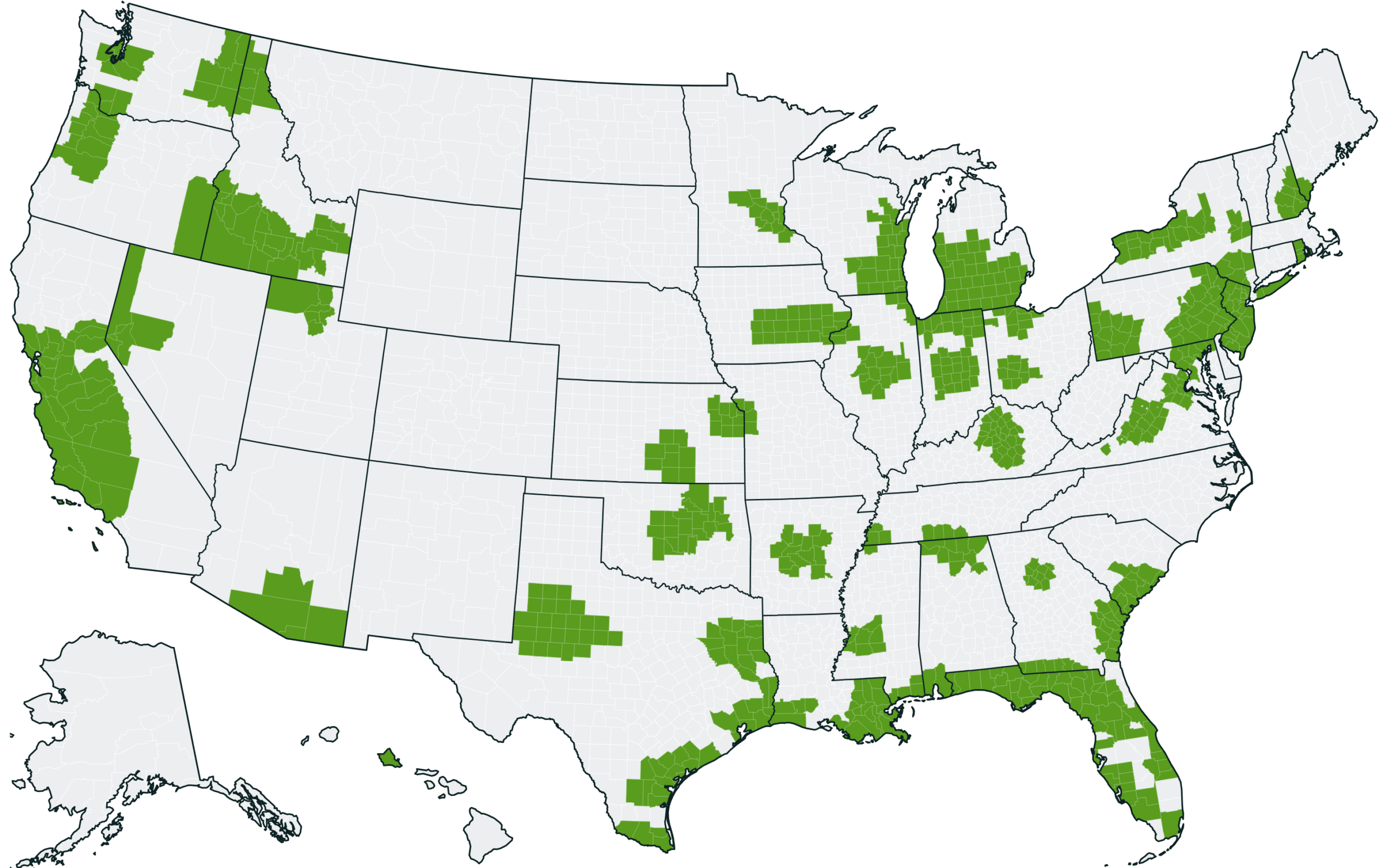
- Available
- Not available
 Franchise ownership guide
For prospective owners
Not ready to talk? Read first.
The guide covers what a franchise developer would walk you through, on your own time: why B2B service ownership works, whether it fits you, what it costs and how owners fund it, how to plan, equip and staff the business, and how Kitchen Guard owners win commercial accounts.
Franchising FAQ
Who are Kitchen Guard's customers?
Commercial kitchens only: restaurants, hotels, hospitals, schools, senior living communities, stadiums and cafeterias. There’s no residential work. You sell to restaurant operators and facilities directors who need their exhaust systems cleaned on a set schedule, and your crews usually work overnight or before opening so a kitchen never shuts down for service.
Is hood cleaning a recession-resistant business?
Hood cleaning is required work, not a discretionary purchase. NFPA 96 sets how often commercial kitchens must be cleaned, fire marshals inspect for it and insurance carriers expect the records, so kitchens keep cleaning on schedule in slow years too. No business is immune to a downturn, and your results will depend on your market and how you run the business.
Can I run a Kitchen Guard hood cleaning franchise semi-absentee?
Not at the start. The FDD requires you to devote full time and best efforts to the business and personally supervise day-to-day operations (Item 15). With Kitchen Guard’s written approval, you can later hand daily management to a Designated Manager who completes the initial training. Most owners spend their time on sales, client relationships and leading their team rather than cleaning hoods.
Should I buy a hood cleaning franchise or start my own business?
An independent has to learn NFPA 96, choose equipment, build a brand and find every account alone. A Kitchen Guard owner starts with Kitchen Guard Academy training, a recognized name, documented reporting, operating software, marketing support and a Franchise Advisor. You pay an initial fee and ongoing royalties for that (FDD Items 5 and 6), so compare both paths with your own numbers.
Do I need hood cleaning experience or certification?
No experience is required. Owners come from management, sales, the military and other trades. Kitchen Guard Academy covers safety, chemicals, filters, roof work and the cleaning process, taught by IKECA Certified Exhaust Cleaning Specialist instructors to the ANSI/IKECA C10 standard. Certification rules for technicians vary by state and fire authority; your franchise developer will cover what applies in your territory.
How much does a Kitchen Guard hood cleaning franchise cost?
The estimated initial investment is $210,486 to $285,883, including the $49,000 initial franchise fee (FDD Items 5 and 7). Kitchen Guard looks for $75,000 in liquid capital and $250,000 net worth. Ongoing fees include a royalty, a 2% promotional fund and a $499 monthly technology fee (Item 6). Your actual cost depends on your territory, equipment and working capital.
Does Kitchen Guard offer a veteran franchise discount?
Yes. Eligible veterans and first responders receive $10,000 off the $49,000 initial franchise fee, as set out in Item 5 of the 2026 Kitchen Guard Franchise Disclosure Document. Leadership, discipline and following a proven process carry over well to running a route-based service business. Ask your franchise developer how to confirm your eligibility.
What equipment and crew do I need to start?
Item 7 of the FDD covers your opening equipment, chemicals, uniforms, wrapped vehicle and an office and warehouse of about 1,500 to 3,000 square feet. Kitchen Guard estimates you’ll add $60,000 to $80,000 of equipment between months 4 and 12 and a second vehicle in your first year. You need at least one full-time, trained salesperson from opening day.
How long does it take to open a Kitchen Guard franchise?
Franchisees typically open within 180 days of signing the franchise agreement and must open within 270 days (FDD Item 11). Timing depends on securing a location, financing, permits, training dates and equipment delivery. Grand opening marketing starts two months before you open, so your first accounts are lined up as your trucks hit the road.
What does Kitchen Guard training look like?
Owners complete Kitchen Guard Academy: 10 classroom hours plus 8 days of hands-on training in Escondido, California, or another site Kitchen Guard designates (FDD Item 11). Managers and salespeople get training for their roles too. After launch, an onboarding manager and a dedicated Franchise Advisor set monthly goals with you and coach against system-wide benchmarks.
What marketing support do Kitchen Guard owners get?
A local website, national campaigns, local search and CRM support, and a marketing playbook, plus cross-brand referrals from the EverSmith network. You fund a grand opening campaign that starts two months before you open and spend at least $1,000 a month on local marketing, which Kitchen Guard helps direct. A 2% promotional fund supports brand-wide marketing.
How do territories work?
Your territory is defined in your franchise agreement by a boundary containing about 1,000 to 2,000 retail food service locations. You will not receive an exclusive territory. You may face competition from other franchisees, from outlets we own, or from other channels of distribution or competitive brands that we control. Territory rights and any performance requirements are set out in Item 12 of the Kitchen Guard Franchise Disclosure Document. Your franchise developer will show you what’s open in your market.